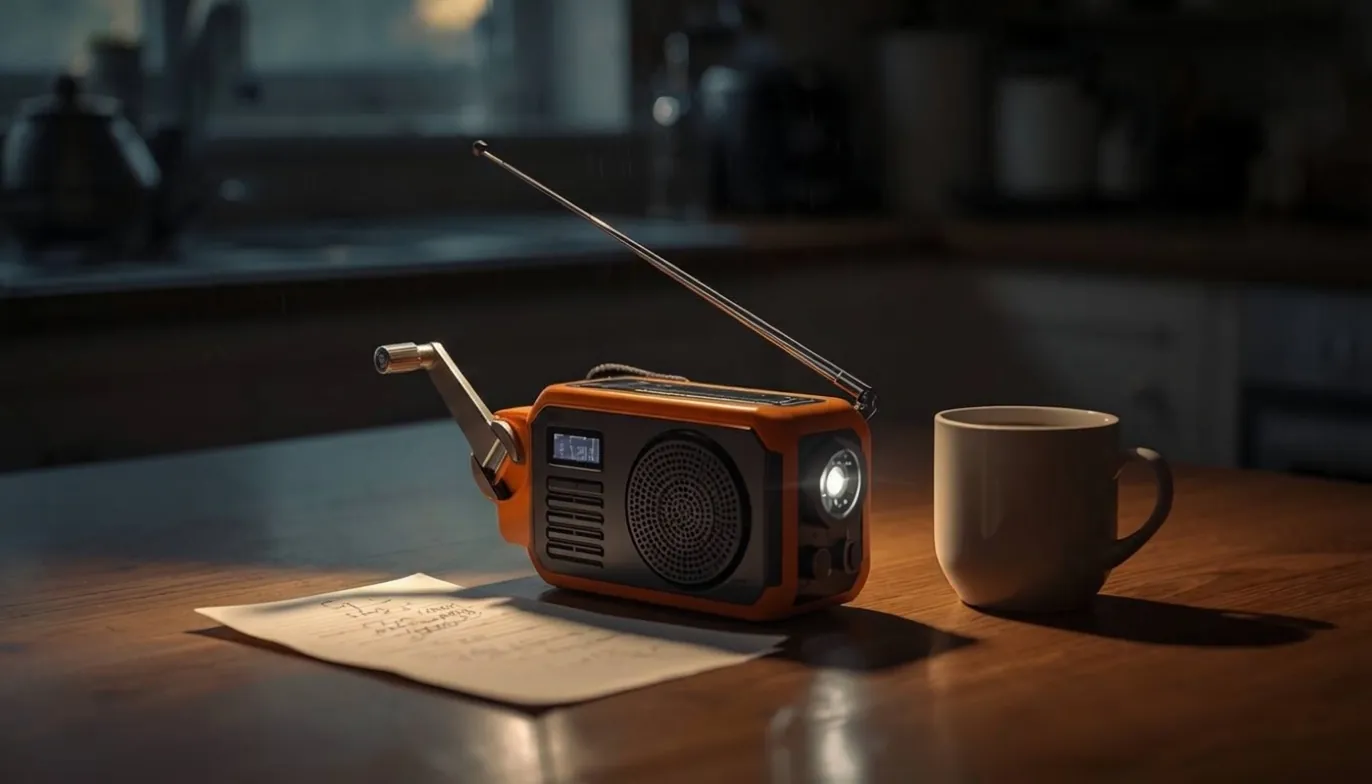
If the power, broadband and mobile networks all go down, broadcast radio is often the only way to get official updates. That's why the UK Government's Be Ready advice includes a battery-powered or wind-up radio in every home kit. A good one costs £15–£40 and can sit in a cupboard for years.
FM or DAB?
- FM: works almost everywhere, uses very little power and is what most wind-up radios receive. The best choice for an emergency radio.
- DAB/DAB+: more stations and clearer sound, but uses more battery and reception can be patchy. Fine as an extra, if the radio also has FM.
- MW (AM): a useful extra — BBC Radio 5 Live broadcasts on medium wave across much of the UK.
The Government has said FM and DAB broadcasting will continue until at least 2030.
Ways to power it — get at least two
- Hand crank: works forever, but a minute of cranking typically gives only several minutes of listening.
- Built-in rechargeable battery: charge it by USB so it's ready. Built-in batteries wear out over the years, so keep it topped up.
- Standard AA/AAA batteries: the most reliable backup, because spares are easy to store. Look for a radio that takes them.
- Solar panel: slow, but useful during a long outage.
Features worth having
- A built-in torch — one gadget instead of two.
- A USB output to give your phone an emergency top-up. Be realistic: cranking only adds a little charge, so it's for a short call, not a full charge.
- Some water resistance, such as an IPX4 rating or better.
- A clear tuning display so you can find your BBC local radio station quickly.
Ignore these US features
Many "emergency radios" on Amazon UK are American models. Their NOAA weather band and weather alert features only work in the USA and do nothing in the UK. Don't pay extra for them. Also check that a radio covers the UK FM band (87.5–108MHz) and charges with a normal USB cable.
Which type should you buy?
| Type | Typical price | Best for |
|---|---|---|
| Simple FM/MW crank radio | £15–£25 | Basic home kit, grab bag |
| Crank radio with torch, solar and USB charging | £20–£40 | Most households — the best all-rounder |
| Portable DAB+/FM radio that takes batteries | £30–£70 | Everyday use that doubles as an emergency radio |
Typical UK prices; check current prices and recent reviews before buying.
Set it up before you need it
- Find and write down the frequency of your BBC local radio station — that's where local emergency information is usually broadcast.
- Charge it fully, and keep spare AA batteries next to it if it takes them.
- Test it every few months. A radio that won't turn on in a power cut is no use.
Some links in this guide go to Amazon UK. They're affiliate links: if you buy, we may earn a small commission at no extra cost to you.