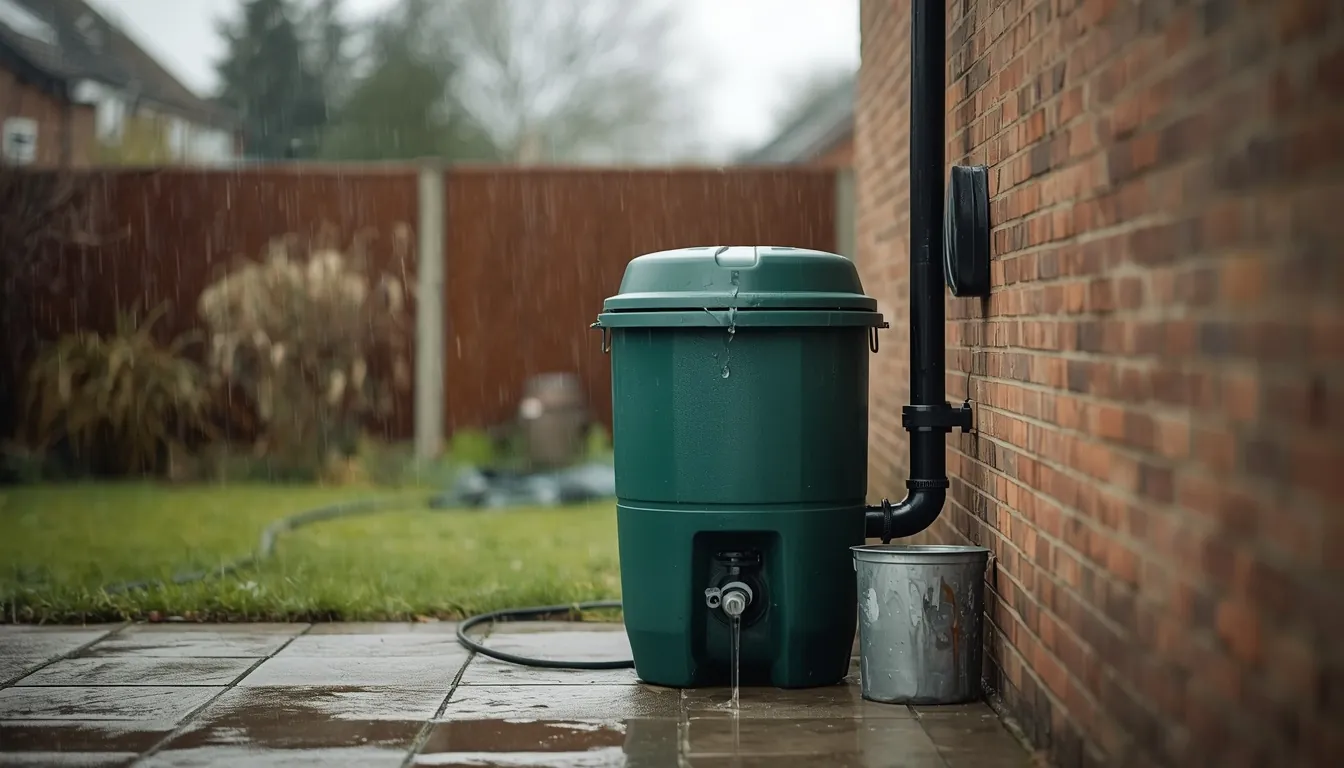
When a water main bursts or a drought brings restrictions, the first thing people run out of is water for flushing the toilet and washing, not drinking water. A water butt connected to your drainpipe gives you a free store of hundreds of litres for exactly that, so your bottled water can be kept for drinking.
Important: untreated rainwater is not safe to drink. Use it for flushing, washing and cleaning, and keep bottled water for drinking.
What rainwater is good for in an emergency
| Use | OK with rainwater? |
|---|---|
| Flushing the toilet | ✅ Yes. Pour a bucket (around 6–9 litres) straight into the bowl |
| Washing floors, clothes and outdoor items | ✅ Yes |
| Washing hands and body | ⚠️ Ok for a quick wash, then use hand gel. Avoid cuts and eyes |
| Washing up and cooking | ⚠️ Only after boiling, and better with tap or bottled water |
| Drinking, brushing teeth, baby bottles | ❌ No. Use bottled or tap water |
How much rainwater can you collect?
The rule of thumb is simple: 1mm of rain on 1m² of roof gives about 1 litre of water. If one downpipe drains 20m² of roof, a 5mm shower gives roughly 100 litres, enough to half-fill a typical water butt. Over a wet UK week, one butt can fill completely.
What you need
- A water butt of 100–250 litres. Slimline water butts suit narrow side returns and small gardens.
- A downpipe diverter kit: it fits into your drainpipe, fills the butt and sends the overflow back down the drain when it's full.
- A stand, so a bucket or watering can fits under the tap.
- A secure lid: keeps out leaves, insects and, above all, small children.
- Collapsible water containers to carry water indoors.
How to set it up (about an hour)
- Choose a downpipe near where you'd need the water, on firm, level ground.
- Put the butt on its stand next to the downpipe.
- Cut the downpipe at the height the diverter kit instructions give, and fit the diverter.
- Connect the diverter hose to the butt and check the overflow works in the next shower.
- Fit the lid and keep it closed.
Renting? Ask your landlord before cutting a downpipe. A freestanding butt that collects from a short, removable diverter is usually easy to agree.
Keep it safe and clean
- Keep the lid on at all times. An open butt is a drowning risk for small children and a breeding ground for mosquitoes.
- Empty and rinse it once a year, ideally in late autumn or early spring.
- Clean your gutters so leaves and moss don't end up in the water.
- In hard frosts, leave some space at the top and check the butt and tap for cracks afterwards.
- Never connect a water butt to your home's drinking water pipes. Rainwater systems must be kept separate from the mains supply.
Can you make rainwater drinkable?
Only as a last resort, if you have no bottled or tap water and no supply from your water company. Filter out debris through a clean cloth, then boil it for at least a minute, or use water purification tablets as instructed. Even then, boiling and tablets don't remove chemicals from roofs or gutters. In a real outage, water companies set up bottled water stations and deliver to customers on their Priority Services Register: use those first.
A bonus in summer
The same butt saves money and water all year: watering the garden with rainwater during a hosepipe ban is usually allowed, as bans cover mains water. Check your water company's rules.
Some links in this guide go to Amazon UK. They're affiliate links: if you buy, we may earn a small commission at no extra cost to you.