Key point: even if you have a gas boiler, your heating almost certainly needs electricity for its controls and pump. In a winter power cut the radiators go cold within an hour or two, and a typical UK home can lose several degrees over an evening.
Before the power goes (if there's a storm warning)
- Heat the house up. Turn the heating up for a few hours before the storm arrives: a warm house cools more slowly.
- Fill flasks with hot water. A good vacuum flask keeps water hot for hours — enough for hot drinks and hot water bottles later.
- Charge everything: phones, power banks, rechargeable lights and, if you have one, a portable power station.
When the power goes off
- Pick one warm room. Choose a small room with few outside walls, gather everyone there and keep the door shut.
- Close curtains and block draughts. Draw thick or thermal curtains as soon as it gets dark, and put a draught excluder or rolled towel along the bottom of the door.
- Layer up — starting with a base layer. A thermal base layer, a jumper and a fleece trap more heat than one thick coat. Add a hat, thick socks and slippers: you lose a lot of heat from your head and feet.
- Use blankets and sleeping bags. A 4-season sleeping bag is the warmest way to sit or sleep without heating. Fleece blankets over your lap work well too.
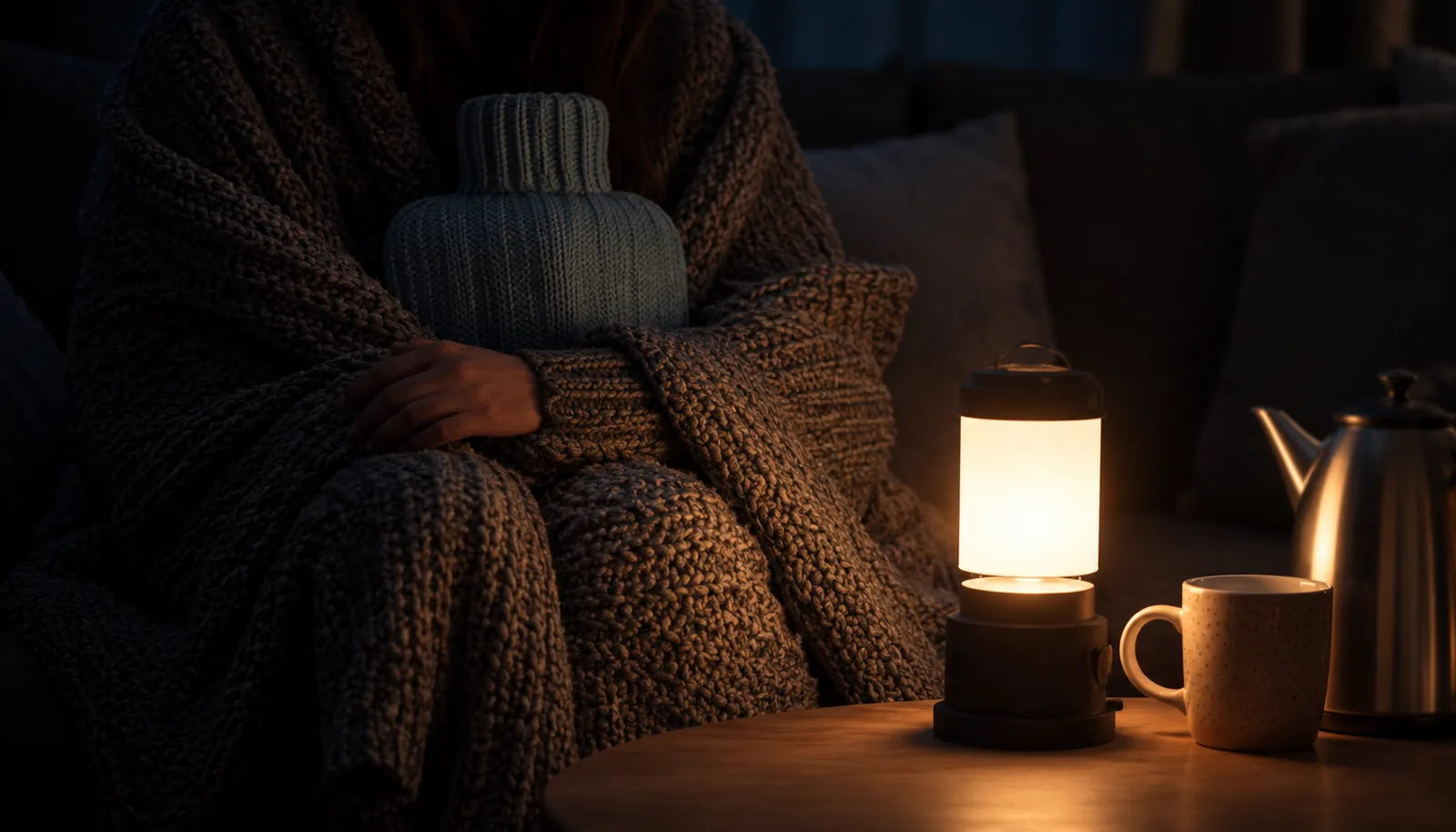
- Hot water bottles. Fill them from your flasks. Use a cover, and don't use boiling water.
- Eat and drink something warm. Food gives your body fuel to make heat. If you have a gas hob that can be lit safely with a match, you can heat soup — but never use the oven or hob to heat the room.
- Keep moving. Get up every half hour or so and walk around, especially older people.
- Reusable hand warmers help, especially for anyone with poor circulation — gel hand warmers can be recharged in boiling water once the power is back.
- Use battery lights, not candles. Candles add almost no heat and are a fire risk. LED lanterns are safer and last for hours.
Never do this
- Never use a BBQ, camping stove, patio heater or petrol generator indoors — or in a garage or tent. They produce carbon monoxide, which can kill. Fit a carbon monoxide alarm.
- Don't leave a gas oven or hob on to heat the room.
- Don't leave candles burning unattended or near curtains.
Backup power: run an electric blanket
An electric heated throw or blanket typically uses only around 50–150W — far less than a heater. A mid-sized portable power station (500Wh+) can run one for several hours, which can make a real difference for an older person or a baby. A power station can't run a fan heater for long.
Looking after older people and babies
Older people, babies and anyone with a heart or lung condition get cold faster and may not notice it. Check on elderly neighbours and relatives. Signs of hypothermia include shivering, pale cold skin, confusion, slurred speech and drowsiness — call 111 for advice or 999 in an emergency. If someone in your home relies on warmth for their health, join the Priority Services Register.
Some links in this guide go to Amazon UK. They're affiliate links: if you buy, we may earn a small commission at no extra cost to you.