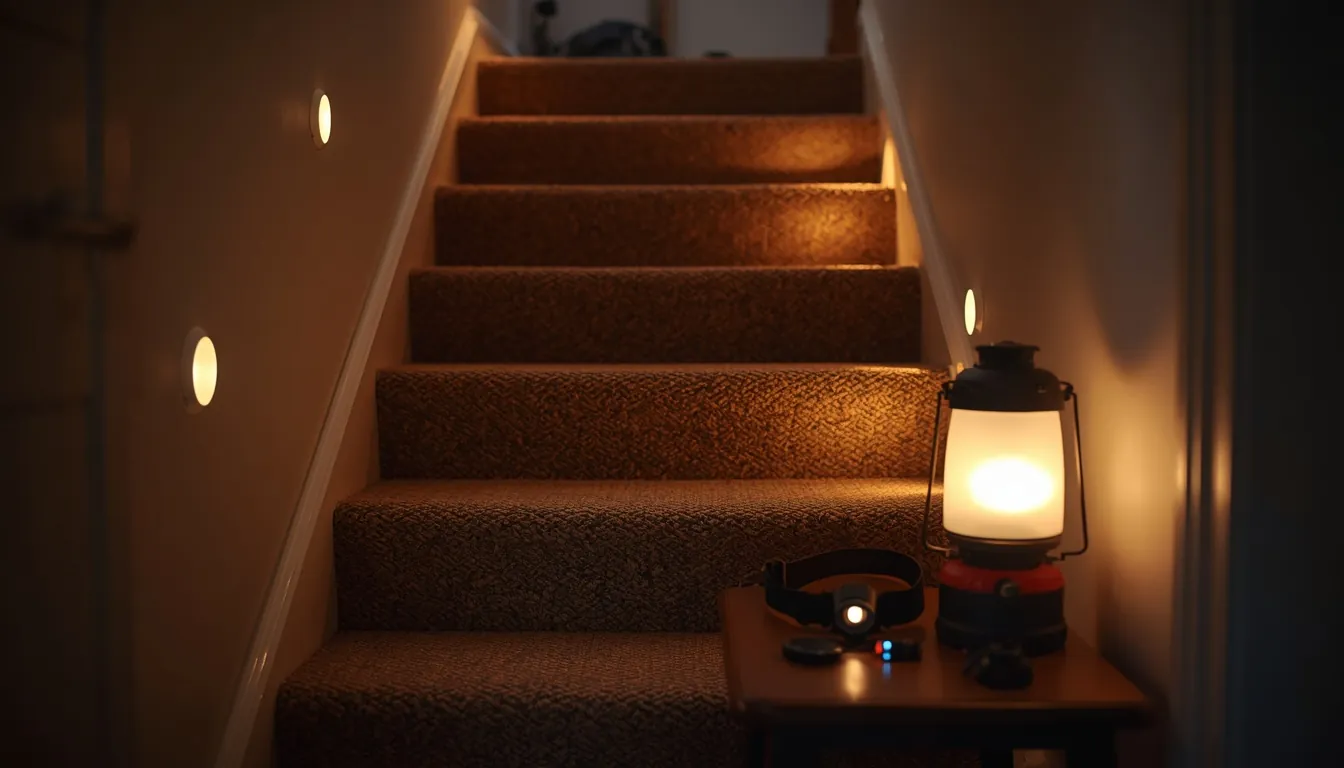
When the lights go out, the first thing everyone reaches for is a phone torch, which drains the battery you'll need for calls and news. A couple of proper lights cost less than £40 and make a power cut much safer, especially on stairs and for older people.
Quick answer: for most homes, get one LED lantern per room you'll use, one head torch per adult and a few push lights for the stairs. Skip candles.
The four lights worth having
| Type | Best for | Typical price |
|---|---|---|
| LED lantern | Lighting a whole room: the kitchen table, living room or bathroom | £10–£25 |
| Head torch | Hands-free jobs: cooking, the fuse box, reading, getting kids to bed | £8–£25 |
| Wind-up torch | A backup that never runs out of batteries | £8–£15 |
| Push lights or motion lights | Stairs, landings and bedside: preventing falls in the dark | £10–£20 for a pack |
How bright? Lumens explained
- Lantern: 150–300 lumens lights a room comfortably. More just drains the battery faster.
- Head torch: 200–400 lumens is plenty indoors.
- Handheld torch: 100–300 lumens for moving around the house.
Be wary of very cheap lights claiming thousands of lumens: the figures are often exaggerated. Runtime on the low setting matters more in a long power cut than maximum brightness.
Rechargeable or batteries?
- Rechargeable (USB-C): no batteries to buy, and you can top them up from a power bank. But they must be kept charged: check them every few months.
- AA/AAA batteries: easy to store and swap. For lights that sit in a cupboard for years, lithium AA batteries last longer in storage and are far less likely to leak than alkaline ones.
- Best of both: some lanterns take both, so you're covered either way.
Tip: if you store a torch with alkaline batteries, take the batteries out or check them yearly. Leaking batteries are the most common reason an emergency torch doesn't work.
Features that help in a power cut
- A hanging hook or handle on lanterns, so light comes from above.
- A magnetic base on torches, to stick them to the fridge or fuse box.
- A low or red-light mode for night-time trips without dazzling anyone.
- A battery level indicator.
- Some water resistance (IPX4 or better), especially for a flood kit.
Why not candles?
Candles give little light, add almost no warmth and cause house fires every winter, usually when left unattended or near curtains. If you do use them, never leave them alone and keep them away from children and pets. An LED lantern is safer and costs about the same as a box of good candles.
For older parents and relatives
Falls in the dark are a real risk. Put motion-sensor lights on the stairs and landing and by the bed, so they come on without anyone having to find a switch. Add a simple lantern with one big button. See our kit for elderly parents.
How many do you need?
- 1 LED lantern for each room you'll gather in (usually 2).
- 1 head torch per adult.
- 1 wind-up torch as a backup.
- Push or motion lights for the stairs and bedside.
Some links in this guide go to Amazon UK. They're affiliate links: if you buy, we may earn a small commission at no extra cost to you.